Ice Dams and Winter Ceiling Leaks
An ice dam is a ridge of ice that forms at the eave when snow melts over a warm attic and refreezes at the cold overhang. Meltwater then pools behind the ice and works its way up under the shingles, through the deck and into walls and ceilings.
Why it happens here: Appleton has the perfect setup for ice dams. Snowpack stays on roofs for months, and late-winter thaws come between hard freezes. Many older homes also have thin insulation and little ventilation. Cape Cods and 1920s bungalows are the worst offenders because heat escapes straight into the roof slope. Clogged gutters under mature maples and oaks give the ice a foundation to build on. Bath fans vented into the attic add even more warm, moist air. Roofs installed before ice barrier requirements often have no membrane at the eaves at all.
Signs to look for
- Thick ice ridges along the eaves or in the gutters
- Large icicles, especially over living spaces
- Brown stains on ceilings near exterior walls
- Wet or peeling paint on interior walls below the eave
- Water dripping from soffits or window trim
- Frost or wet insulation in the attic
Local patterns: We see these leaks most on Cape Cods and 1940s–60s ranches around Erb Park, on bungalows in Kimberly and Little Chute and on Victorian roofs with many valleys near City Park. Calls peak in late January through early March, when thaw follows hard freeze.
How we fix itFirst we steam the ice off and tarp if needed to stop active water. Next season we add ice and water shield, seal attic air leaks, fix insulation and balance ventilation so the dams stop forming.
Hail and Wind Storm Damage
Hail knocks granules off shingles and bruises the mat underneath, and it dents metal roofing and flashing. Strong straight-line winds break the sealant bond, lifting or creasing shingle tabs or tearing them off completely.
Why it happens here: Spring and summer thunderstorms cross east-central Wisconsin regularly, sometimes as derecho-type wind events. Lake Winnebago and Green Bay can make local wind worse. Roofs that have been through years of freeze-thaw already have weak sealant strips, so they lift more easily. The damage often isn't visible from the ground, so homeowners don't know whether to file a claim. Out-of-state storm chasers move in fast after a big hail day.
Signs to look for
- Shingles or tabs in the yard after a storm
- Creased or lifted shingle edges
- Granules collecting in gutters or at downspouts
- Dents in gutters, vents, siding or metal roofing
- Dark spots or soft bruises on shingles
- New leaks after a storm
Local patterns: Hail and wind claims tend to cluster by neighborhood, often hitting whole subdivisions in Grand Chute, Greenville, Harrison and Fox Crossing at once. Exposed roofs on open rural lots near Freedom and Black Creek take extra wind.
How we fix itWe do a documented inspection with photos, secure any openings right away and repair or replace the damaged section. If you file a claim, we follow Wisconsin's disclosure rules for insurance-contingent roofing contracts.
Failing Chimney, Skylight and Wall Flashing
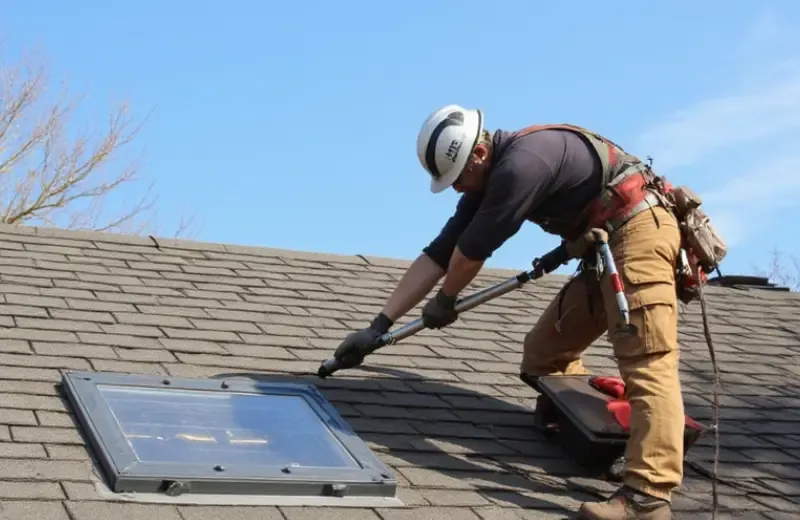
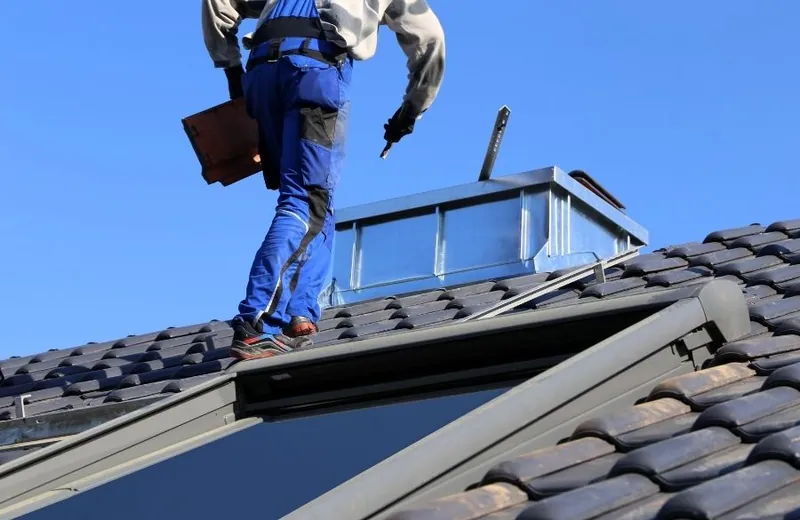
Flashing is the metal at chimneys, skylights, walls and valleys that directs water away from joints in the roof. Once its sealant cracks or the metal pulls loose, water gets into the framing behind it, often long before you see a stain.
Why it happens here: Temperature swings of more than 100 °F a year pull flashing back and forth until the caulk splits. Older brick chimneys in Appleton and Menasha often have only face-sealed flashing and no proper counterflashing cut into the mortar joints. Snow piled against chimneys and walls holds meltwater against those joints for weeks. Skylights added in the 1980s and 1990s often have curb flashing that has reached the end of its life.
Signs to look for
- Stains on ceilings next to the chimney or skylight
- Cracked or missing caulk at flashing edges
- Rusted or lifted step flashing
- Loose mortar or spalled brick above the roof line
- Drips on the inside of the skylight frame
- Damp attic framing around the chimney
Local patterns: This is common on century homes near Lawrence University, on Doty Island in Menasha and along East Forest Avenue in Neenah. It also shows up on 1990s two-stories in Harrison and Sherwood that have walls meeting lower roofs.
How we fix itWe remove the failed flashing and install new step flashing and counterflashing or a skylight flashing kit, tying it properly into the underlayment and shingles. We don't rely on more caulk.
Poor Attic Ventilation and Moisture
An attic without enough intake air at the soffits and exhaust at the ridge traps heat in summer and moisture in winter. That causes frost buildup, mold, rotted decking and shingles that wear out early.
Why it happens here: Humid Fox Valley summers and long, cold winters make attic moisture worse. Many homes built before 1950 were designed with almost no ventilation. Later remodels often blocked the soffit vents with insulation. Bath and kitchen fans that vent into the attic are a common mistake we find. Poor ventilation can also void shingle manufacturer warranties, and most homeowners don't know it's the root cause.
Signs to look for
- Frost on roof nails or sheathing in winter
- Black staining or mold on attic decking
- Wavy or sagging roof deck
- Shingles curling early on south and west slopes
- Bath fan ducts ending in the attic
- Unusually hot upstairs rooms in summer
Local patterns: We find this all the time in Appleton's older neighborhoods, in Kaukauna and Kimberly bungalows, and in 1990s subdivision homes where builders skimped on ridge and soffit venting.
How we fix itWe balance intake and exhaust with soffit, ridge or box vents, add baffles, reroute bath fans outside and point out air-sealing needs so the roof lasts its full rated life.
Worn-Out 1990s–2000s Subdivision Roofs
These are builder-grade 3-tab and entry-level architectural shingles from the subdivision boom that are now losing granules, curling and cracking. Leaks start showing up in several spots, and patches stop holding.
Why it happens here: Fox Cities suburbs grew fast in the 1990s and 2000s, and many homes went up with the cheapest shingle available. After 20 to 30 Wisconsin winters and summers, those roofs are aging out all at the same time. Cut-up rooflines with lots of valleys put extra strain on the weakest points.
Signs to look for
- Curling or cupped shingle edges
- Bare spots and heavy granule loss
- Cracked or brittle tabs
- Leaks showing up in valleys
- Neighbors replacing roofs on your street
- Repairs needed every year
Local patterns: Whole streets in Grand Chute, Greenville, Harrison, Sherwood, Kimberly and Little Chute are hitting this point together. HOA color rules often apply when you replace.
How we fix itWe do a full tear-off and replacement with architectural shingles, ice and water shield at the eaves and valleys, and corrected ventilation, using HOA-approved colors when required.
Snow Load on Low-Slope and Lower Roofs
Heavy or drifted snow can build up on flat and low-pitch sections such as porches, garages and additions, sometimes beyond what the framing can safely carry.
Why it happens here: Wind blows snow off upper roofs and drifts it onto lower ones next to taller walls. Wet March snow weighs far more than January powder. Mid-century additions and older porches weren't always framed for modern load expectations.
Signs to look for
- Drifts several feet deep against walls
- Interior doors sticking or drywall cracking
- Sagging rooflines or gutters
- Creaking or popping sounds
- Ponding or leaks on flat sections
Local patterns: This is most common on attached garages in newer subdivisions, porch roofs on older Appleton homes and low-slope commercial and agricultural buildings around Wrightstown and Stockbridge.
How we fix itWe remove snow safely by hand, leaving a protective layer so we don't damage the shingles, check for structural or membrane damage and recommend repairs or drainage fixes.
Clogged and Overloaded Gutters
Gutters full of leaves, seeds and ice can't drain. Water then spills over the fascia, rots the wood and gives ice dams a base to grow on.
Why it happens here: Mature maples and oaks in Appleton's older neighborhoods drop seeds in spring and leaves in fall. Undersized gutters can't keep up with summer downpours, and the debris freezes solid in winter.
Signs to look for
- Water spilling over gutter edges
- Sagging gutters or pulled spikes
- Plants growing in gutters
- Rotted fascia or stained siding
- Ice packed in gutters all winter
Local patterns: This shows up constantly in tree-lined streets near City Park, The Flats and Erb Park, and in older parts of Neenah and Menasha.
How we fix itWe clear the gutters, repair the fascia, install gutter guards and add heat cable where ice keeps coming back.